Pre-marital duty of disclosing past morality
Tess of the d'UrbervillesThe courtship honesty norm is the expectation that Tess must reveal her past before marrying Angel Clare, and the novel makes that expectation a conflict between candour and an unequal sexual morality. Tess tries to protect Angel by refusing his proposals, promises to tell him everything, and finally confesses; yet the disclosure does not secure understanding. Instead, it brings into view how a rule presented as a private duty can turn the consequences of an assault into a test of a woman’s worth, while the man who hears her story retains the power to decide whether it can be forgiven.
The rule and the withheld story
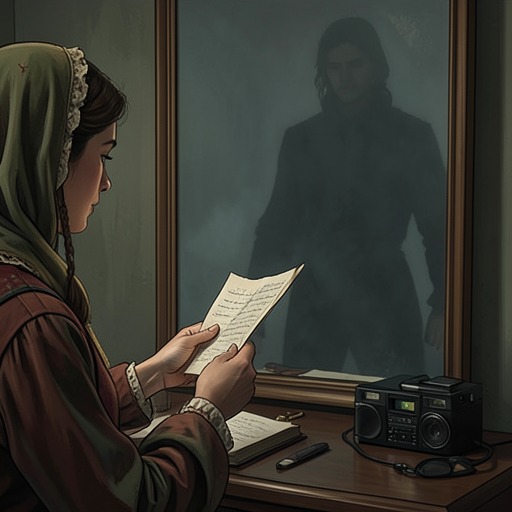
Tess’s reluctance to marry Angel is not indifference. She loves him, but holds to the judgment she reached before courtship gathered force: she must not accept a marriage that might later cause her husband bitter regret for having been blind to her history. Her refusal is thus an attempt to anticipate a future injury to him, even as she suffers in silence. She wonders why nobody tells him what happened, noting that it was only forty miles away, but nobody does. The distance is small enough to make the silence seem strange and large enough to leave her alone with the responsibility of disclosure.
When Angel presses her to promise that she will belong to nobody else, Tess agrees to give him a complete answer and says she will tell him her experiences, all about herself. He treats the word lightly, comparing her experiences to a convolvulus opening for the first time. The exchange makes their different understandings plain: for Angel, her promise sounds like a lover’s playful assurance; for Tess, it is a commitment to disclose the knowledge she believes could change his decision. Her offer does not immediately resolve the matter. She postpones giving her reasons, and the delay keeps the moral question alive even while their affection grows.
A duty debated by others
The question of whether a woman should tell her story becomes explicit in a conversation among the dairy workers. Asked what the woman in the discussion ought to have done, Tess answers that she ought to have told the truth or refused the marriage, though she cannot decide between those choices. The bread-and-butter chokes her as she speaks. Her response is not detached advice: she is judging her own predicament through a general rule that appears to leave her only two painful alternatives.
Beck Knibbs rejects that rule with a joke, saying she would have married and would have knocked the man down if he demanded advance disclosure. The others laugh, but Tess can offer only a sorry smile. What is comedy to them is tragedy to her; she leaves the table and goes beside the Var, where floating water-weeds gather against the piles that keep the cows from crossing. The riverbank scene gives physical shape to the distance between public amusement and private cost. To Tess, a woman telling her story is the heaviest of crosses; to the company, the same question can be an occasion for laughter.
Confession and unequal judgment
Tess’s declaration that her past was not of her own seeking directly challenges the assumption that confession should be treated as proof of culpability. When she asks Angel to consider the possibility that the sin was not sought by its victim, he refuses to divide the question into fine distinctions. His response leaves the crucial moral distinction unresolved: whether an experience imposed on Tess can rightly count against her as a reason she is unfit to marry.
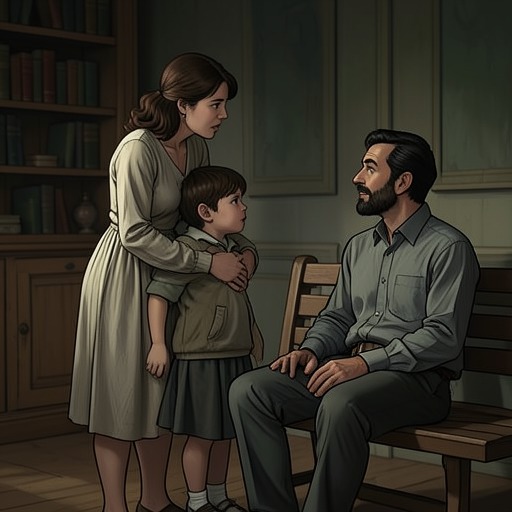
After the wedding, Tess appeals to Angel in anguish, saying that she was a child when it happened and knew nothing of men. Angel acknowledges that she was more sinned against than sinning, but adds that forgiveness is not all. The exchange exposes the limit of confession under a morality that recognizes victimization without allowing that recognition to settle the marriage. Tess has supplied the truth she believed she owed him; Angel’s admission does not prevent the past from governing their present.
Concealment, social judgment, and revision
After the separation, the norm’s pressure continues in Tess’s management of what others can see. She keeps her wedding ring, but wears it on a ribbon around her neck rather than in public. She does not want people to know whom she married, or even to know that she is married, because it would be awkward in the life she now leads. The ring remains with her, but hidden: a private sign of a marriage whose public acknowledgment cannot protect her from hardship.
The surrounding community also treats Tess’s past as a reason to judge and exclude her family. When the Durbeyfields’ lease ends on Lady-Day, their house is required for a carter, and the family must leave Marlott. The narration links this displacement to the shadow cast over Tess’s life and to a village’s claim to preserve its morality. The rule therefore reaches beyond the couple’s private decision: social judgment helps turn sexual stigma into material insecurity.
Angel’s later reassessment reveals that the judgment was not inevitable. During his absence in Brazil, he begins to question inherited moral standards and considers not only what a person has done but the aims and impulses behind the act. Seen in this light, his earlier rejection of Tess becomes a hasty judgment, and he can no longer say that he would reject her forever. That change does not erase the pain caused by the confession or restore the time in which Tess needed his understanding. The norm’s decisive irony is that it asks Tess to disclose the past as a condition of honest marriage, while the decisive moral work belongs to the listener: whether he can hear the truth without converting an involuntary experience into a lasting sentence.